Environments on The Edge: What Spaces Get Wrong About Stress
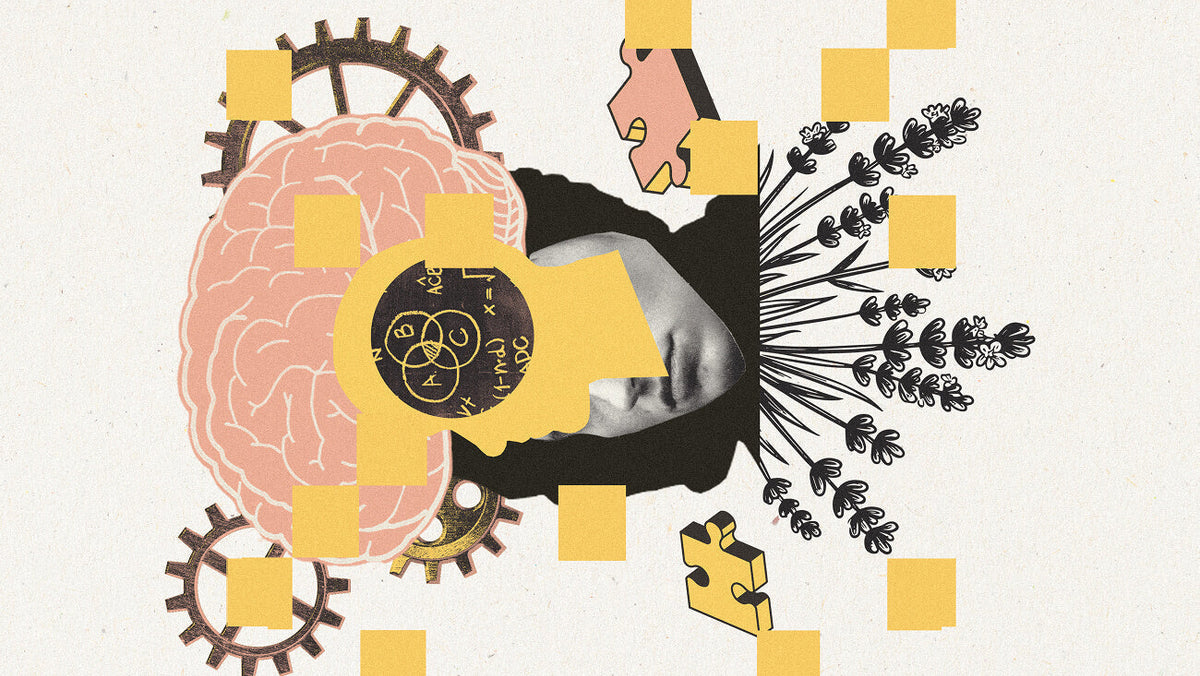
Originally published in Great Spaces Issue 3
Stress has a bit of a reputation problem. Whenever it gets mentioned, it’s usually something to eliminate or reduce. But stress is a two-way street. Remove it entirely, and performance suffers. Work gets sloppy. And inspiration dwindles.
Decades of research show that performance improves with pressure up to a point, then declines sharply. What’s less understood is how quickly people move along this line and how little control they have once the pressure becomes too much.
Dr. Allan Hamilton, a neurosurgeon and former military physician, has spent his career studying how people function under pressure in environments where mistakes carry immediate consequences. Operating rooms, combat conditions, and high-altitude expeditions expose what most offices conceal: once stress crosses a threshold, training and intelligence matter less than physiological response.
“A little bit of stress is really good for you,” Dr. Hamilton says. “A little bit of stress will make you perform at a higher level. But that benefit has a limit. If you overwhelm someone with too much too quickly, then you see a huge falloff in performance.”
He has seen this pattern in extreme environments, where the stakes couldn’t be higher. At high altitude, if the stress comes too fast or too intensely, the results are immediate and dangerous: confusion, reduced coordination, even loss of consciousness or death.
Office work rarely produces life-or-death risks, but the pattern remains. Missed cues, uninformed decisions, and communication breakdowns often trace back to crossing the stress threshold.
And while most workplaces acknowledge this in theory, few design for it in practice.

Workplace design literature encourages using natural light, biophilic elements, and collaborative zones. The problem that goes unmentioned is that these are treated as universally beneficial, when in reality, they aren’t. Open, collaborative environments can increase cognitive load for complex focused tasks. Flexible spaces can introduce inconsistency that forces constant reorientation. Visual openness can reduce perceived control, especially under pressure.
In other words, design features that support one form of work can undermine another, especially when stress enters the equation.
Instead of maximizing a set of spatial attributes such as ambient lighting or acoustics, a well-designed workplace offers control over variability and reduces unnecessary decisions when cognitive resources are under strain.
Thankfully, stress doesn’t affect the body the same way every time. Experience changes the body’s response to stress.
Dr. Hamilton’s research points to a consistent pattern: repeated exposure builds familiarity. “If you keep training and training and training, then your body says, ‘Hey, we’ve seen this before. We know what to do.’”
But that adaptation depends on how exposure occurs. Sudden immersion leads to the brain’s fight-or-flight response, but gradual escalation can help orient individuals, which leads to a sense of control.
This is where design has an underdeveloped role. Most workplaces assume competence rather than supporting its development. They place people in high-visibility, high-stakes situations without spatial or social support.
A more effective method builds confidence by designing for how people move through different levels of pressure. Spaces that progress from private work areas to small-group settings and, eventually, to more public environments give individuals room to develop comfort before working under greater scrutiny. This progressive design works best when it includes places where people can rehearse without consequence, whether that means testing ideas, running through a presentation, or leading a meeting in a lower-stakes context.
Environments need clear and consistent design logic. When rooms behave in predictable ways across a workplace, people spend less time figuring out their surroundings and more time focusing on the task at hand.
Not all stress comes from the work itself, either. Much of it comes from uncertainty.
You’ve probably seen this before: Someone walks into a room to lead a meeting. They don’t know how the technology works. The lighting controls aren’t intuitive. People enter from multiple directions, and the acoustics shift as the room fills.
None of this relates to the task, but it all competes for the leader’s attention. Each small adjustment pulls focus away from the work, forcing the brain to split its effort between figuring out the environment and leading the conversation. As that load builds, the leader ends up reacting to the space instead of guiding the discussion.
The appeal of natural elements often enters here, and with good reason. Exposure to daylight, views, and natural materials consistently correlates with lower stress and faster recovery.

People tend to recalibrate more easily when they have access to environments that feel less constrained and more grounded.
Dr. Hamilton points to research that illustrates the difference. In one study, patients recovering from surgery were split into two groups. One group was given rooms that looked out at a wall. The other had a view of a tree. “The group that looked out on the tree had shorter hospital stays, lower infection rates, lower readmission rates, and lower use of narcotics,” he notes. “All because of a tree. Nature was what made the difference.”
Nature helps the body recover from stress in ways few other interventions can match. And while design can’t recreate that experience indoors, it can bring in daylight, views, and natural materials and encourage people to step outside.
Stress is also rarely experienced alone.
Dr. Hamilton describes the intensity of this dynamic in extreme settings. On expeditions, individuals depend on one another for safety and survival. The result is a level of trust and cohesion that forms quickly. “The absolute primary requirement is that the team be tightly knit. A team has to take care of each other,” he says.
Workplaces may not carry the same risks as mountaineering expeditions, but the principle holds. Strong teams help absorb pressure across the group, while weaker ones push it back onto individuals, amplifying its effects.
More effective environments allow teams to control how and when they engage. Smaller, focused settings tend to support clearer communication under pressure than large, exposed ones. Spaces that can shift between interaction and concentration give people more control over their own stress thresholds.
Many workplaces invest heavily in design without fully considering how they’ll change under stress. The result is often a setting that looks great, but behaves inconsistently under strain. The signals are subtle: slower decisions, unclear expectations, and an increased likelihood of small errors that compound over time. Nothing fails outright, but performance slips in ways that are difficult to trace back to their source.
A different approach begins with the recognition that pressure is not an exception but a condition of meaningful work. Design can’t eliminate it, and it shouldn’t try.


Some things are too good to keep to yourself.